Commercial Waste in Highgate
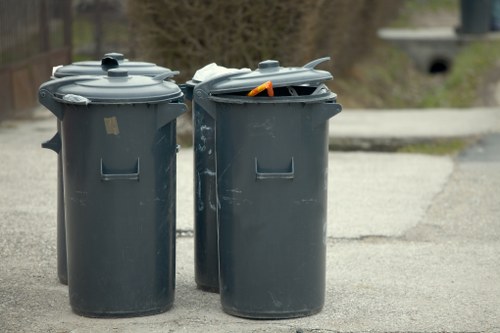
Commercial waste in Highgate needs a careful, practical approach: the right containers for the material, the right handling for the site, and a collection plan that fits how the business actually operates. We help organisations manage routine waste streams and one-off clearances with a focus on tidy removal, sensible segregation and straightforward service choices. That can include everyday non-hazardous business waste, bulky items, office contents and mixed materials that need to be sorted before loading.
Our commercial waste service is designed for workplaces that want a clear, workable route for disposal without unnecessary disruption. The emphasis is on safe collection, responsible transfer and keeping the process as simple as possible for the customer. For businesses comparing options, the key questions are usually what type of waste needs moving, how often it appears, and whether the items can be recycled, reused or need specialist handling. If you are gathering details now, you can start with a short list of materials and access notes and then request a quotation.
Because commercial waste covers many settings, the service is flexible rather than one-size-fits-all. Offices, shared premises, storage spaces and small trade environments often need different approaches to sorting, lifting and scheduling. We can handle regular removal of general business rubbish as well as heavier or awkward items where manual carrying and loading need extra care. Tell us what needs clearing and what kind of site it is, and we can help shape the job around those details.
General business waste collection
General business waste collection is the core service for premises that produce mixed non-hazardous rubbish on a regular basis. This often includes bagged refuse, packaging, office clutter, unwanted stock, dismantled fixtures and other day-to-day material that accumulates behind the scenes. The practical aim is to remove it cleanly and keep storage areas, back rooms and loading points usable. A well-planned collection also makes it easier to separate anything suitable for recycling before it is sent onward.
Where commercial waste is mixed, the sortation stage matters. Cardboard, plastic, metals and reusable office items are often easier to handle when they are kept apart from general rubbish, but not every site has the space or time to pre-sort everything. In those cases we can work with the material as presented and decide how best to load and process it. If you already know there is a sizeable quantity, a short description of the waste type will usually make the next step simpler.
What this type of removal can cover
- Bagged or loose non-hazardous business waste
- Packaging, cardboard and stored surplus materials
- Unwanted office items and light fixtures
- Mixed bulky rubbish that needs loading by hand
Office waste and workplace clearances

Office waste and workplace clearances are about removing items that have reached the end of their useful life in a professional setting. That might include desks, chairs, shelves, filing cabinets, redundant monitors, surplus stationery stock or obsolete equipment that no longer fits the way the workplace runs. For many customers the main value is not just disposal, but having the unwanted material lifted and taken away in a controlled, orderly way.
Workplace clearances often need more planning than simple bag removal, especially where access is shared or where items are being moved from upper floors, basements or rooms with limited turning space. We look at the practical side of the job, such as carrying routes, parking constraints, lift access and whether anything needs to be dismantled before removal. If the clearance includes both lightweight and heavy items, a clear item list helps separate what can be moved directly from what may need extra handling.
Businesses refreshing their interiors can also use the service for partial clear-outs rather than a full office strip-out. That may involve removing only the old furniture, only the redundant equipment, or only the accumulated waste from a storage room or work area. The advantage is that you keep control over what stays in place while clearing the parts that are no longer needed. For a focused quote, please get in touch with the main details of the work.
Bulky items, fixtures and furniture disposal
Bulky items, fixtures and furniture disposal is useful when ordinary bins are not suitable for the scale or shape of the waste. Desks, cabinets, reception furniture, shelving, small fittings and awkward mixed items can all require careful carrying and loading. This part of the service is often chosen when a business is replacing furniture, closing off a storage area or making room for a new layout without waiting for a scheduled internal clear-out.
The practical concern with bulky waste is not only weight, but also the route the item must take to leave the site. Narrow corridors, stairs, protected flooring and shared entrances all influence how the work is carried out. We aim to remove items without making the rest of the premises untidy or difficult to use. In some cases, a simple breakdown of larger items makes the job smoother, and in others it is better to move them intact if that is safest.
If furniture still has life in it, it may be appropriate for reuse or separate transfer rather than being treated as general waste. Where items are damaged, stained or no longer workable, disposal becomes the simpler option. Either way, the right outcome depends on condition, volume and access. Businesses that want to compare options can request a quotation and state whether the material is loose, assembled, or already grouped for collection.
Recycling, sorting and responsible disposal
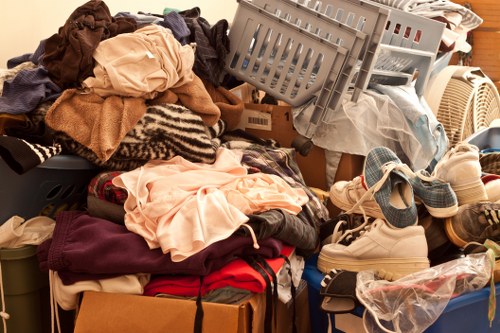
Recycling and responsible disposal are central to any commercial waste job where different material types appear together. The service is not just about taking waste away; it is also about deciding what can be directed into reuse or recycling streams and what must go for final disposal. That distinction matters for mixed premises, because a single clearance can include cardboard, metals, plastics, timber, textiles and general rubbish all at once.
We work with the material in a practical way, separating it where that makes sense and keeping the process straightforward for the customer. This is particularly useful when a business has been accumulating waste over time and the contents of a store room, office corner or back-of-house area are no longer sorted. Careful handling at the point of loading helps avoid unnecessary mixing and makes the job easier to process responsibly afterwards.
Responsible disposal also means avoiding the temptation to treat every item the same. Some materials are best kept together, while others need a closer look because they may not belong in a general waste stream. If you have mixed materials and are unsure how they should be grouped, that is normal. A brief description of the waste categories is enough to begin, and then the collection plan can be matched to the load rather than forcing the load into a rigid format.
How commercial waste jobs are planned
Commercial waste jobs are easier to manage when the basic details are clear before the visit or collection. The main things that help are the kind of waste, the approximate amount, where it is stored, and any access issues such as stairs, loading restrictions or shared entry points. This does not need to be overcomplicated. A straightforward note about the material and the site is often enough to decide what is required.
For many customers, the job is shaped around a few practical questions. Is the waste loose or bagged? Does anything need carrying from upper floors or enclosed rooms? Are there fragile surfaces to protect? These questions help determine how the work is handled and whether the collection can be done in a single visit or needs a more staged approach. If you are gathering information, a quick inventory and a couple of photos can help you request a quotation more confidently.
Useful details to have ready
- Type of commercial waste or mixed materials
- Approximate volume or number of items
- Floor level, access route and parking notes
- Any items that need special handling or separation
Pricing factors and quotation requests
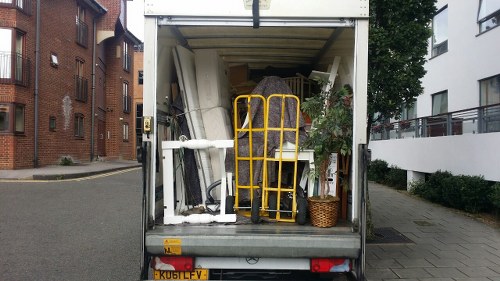
Pricing for commercial waste removal is usually shaped by the amount of material, the type of items involved and the work needed to move them safely. Heavier loads, awkward access, mixed waste streams and larger clearances can all affect the scope of the job. Rather than guess from a general description alone, it is better to give a brief but accurate summary so the quotation reflects the actual work required.
Other practical factors can include whether the waste is already bagged, whether furniture or fixtures need dismantling, and whether the collection point is easy to reach. If the load contains a mix of recyclable and general waste, that may also influence the handling needed. The aim is to keep the quote aligned with the job, not padded with assumptions. One clear message with the basics is often enough to begin.
If you are preparing to request a quotation, you do not need to write a long explanation. A few factual points are usually enough: what needs removing, how much there is, and where it is located. If you want to compare options for a routine collection or a one-off clearance, please ask for a quotation and include the main details in your enquiry.
Businesses we commonly help
Commercial waste needs vary from one type of business to another, so the service has to stay practical. Offices often need paper, packaging and furniture removed. Small workshops may need mixed offcuts, packaging and redundant equipment cleared from work areas. Retail premises can generate packaging, damaged stock and fixtures. Shared workspaces may need recurring collection of general rubbish and occasional bulky item removal. The service is about matching the removal method to the setting.
Different premises also produce waste at different speeds. A site with regular deliveries may build up cardboard and wrapping quickly, while an office undergoing changes may need a larger clearance of desks, seating and filing items. We can work with both routine and occasional jobs, but the details matter, especially where access is shared or storage is limited. For simple planning, it helps to separate what is being removed from what is staying in place.
One reason businesses use a dedicated removal service is that a site can be kept clearer without devoting staff time to moving waste in stages. That matters when the waste is bulky, when the material is scattered across several rooms, or when the area needs to be returned to normal use promptly after the collection. If that is your situation, the next step is to ask for a quotation based on the actual load and access.
About Highgate
Highgate is an area in north London best known for its hilltop setting, historic streets and a strong sense of place shaped by centuries of development. The name is associated with the old gate on the Great North Road, and the settlement grew where routes crossed the ridge between Hampstead, Holloway and neighbouring districts. Much of the area still reflects its long history in the built form: narrow lanes, period houses, village-scale retail streets and a mixture of later infill that sits beside older architecture. Highgate Wood, a remnant of ancient woodland, lies on the northern side of the area and is one of the locality’s most valued open spaces. The neighbourhood is also linked with Waterlow Park, a large hillside park created in the nineteenth century and notable for its gardens, views and former estate character. Nearby, the renowned Highgate Cemetery is one of London’s most atmospheric burial grounds, known for its Victorian monuments and its place in the city’s cultural memory. The area’s topography gives it a distinctive feel, with steep approaches, elevated viewpoints and streets that rise and fall around the ridge. Alongside these older landmarks, Highgate has local schools, churches and community institutions that contribute to its everyday life. Its position on the edge of the wider North London urban fabric means it combines residential calm with easy access to surrounding districts, while still retaining an identity that is immediately recognisable. The result is an area where historic character, green space and compact urban streets sit closely together, giving Highgate a setting that feels both settled and varied.
Access, lifting and site conditions
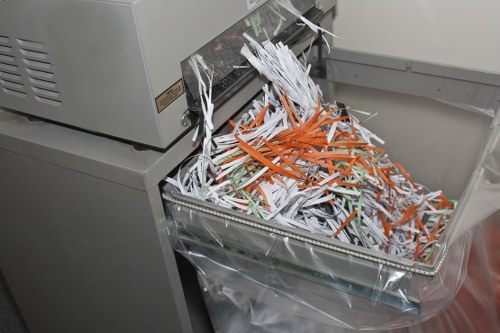
Access can be one of the most important parts of a commercial waste job, especially where items are large, stacked or stored away from the main entry point. Stairways, narrow doors, basement rooms, upper floors and shared corridors all change the pace of the work. The more clearly the site is described, the easier it is to plan the lifting, carrying and loading in a way that suits the premises. That is why simple access notes are genuinely useful.
Where the waste is spread across several areas, it may help to identify the main pickup point and whether anything needs to be moved first to make space. Some jobs are straightforward if the material is already close to the exit; others take more time because the route has to be protected or because items need to be moved carefully through busy parts of the building. The aim is to keep the process orderly and avoid turning the collection into an inconvenience for the rest of the site.
If your premises are tight for space or involve awkward carrying routes, mention that when you request a quotation. It allows the job to be planned around the reality of the site rather than around a generic assumption. That gives a better basis for a fair estimate and a smoother collection day. Send the details when you are ready, and we can help from there.
Make the next step simple
Commercial waste removal works best when the customer can explain the load in plain terms and the service can respond with an appropriate collection plan. Whether you are dealing with routine office rubbish, bulky furniture, mixed workplace clearances or a one-off load from a storage area, the same principle applies: clear information leads to a cleaner and more practical job. We keep the service focused on removal, sorting and disposal so the site can move back to normal use.
If you are comparing options, think about what matters most for your premises: speed of removal, handling of bulky items, responsible disposal or support with mixed materials. Those priorities can be weighed against the waste type and the access conditions to determine what is needed. You do not need a long explanation to begin. A brief, factual enquiry is usually enough to move the process forward.
When you are ready, please request a quotation for commercial waste in Highgate and include the waste type, quantity and access details. That is the simplest way to get a useful response and arrange the right collection.